ServicesSolar Panel Installation
Solar Panel Installation in South Jordan
We begin with a year of your power bills and a close look at your roof, then design a rooftop system sized to what your home actually uses. You get a clear plan, a written quote and an installation finished with care.
Solar that matches how your home uses power
Most disappointing solar systems were sized from a guess. Too large and you pay for panels that send cheap power back to the grid. Too small and the bills you wanted gone keep arriving. We find the real numbers first: your monthly usage, when it peaks and what is likely to change in the next few years.
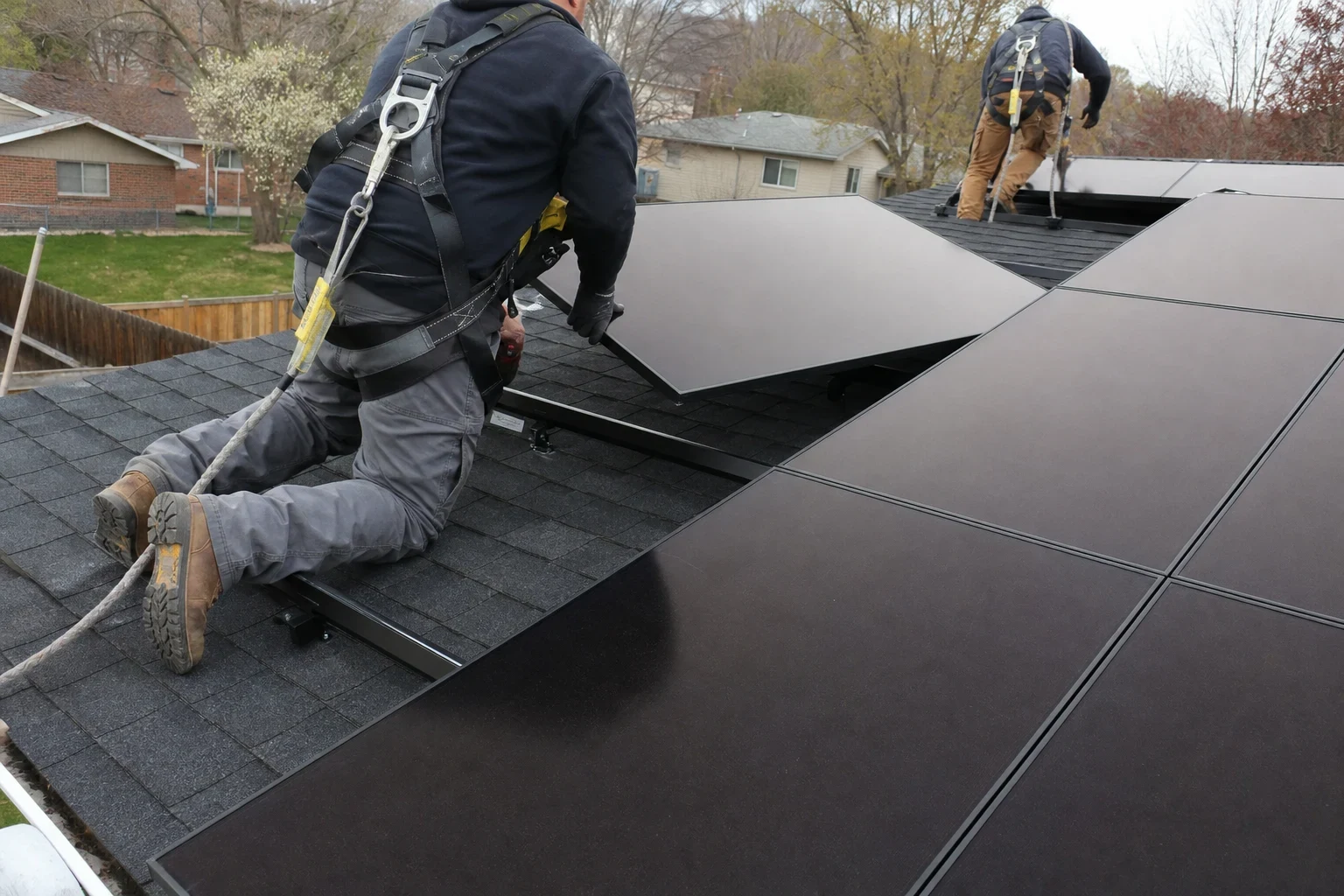
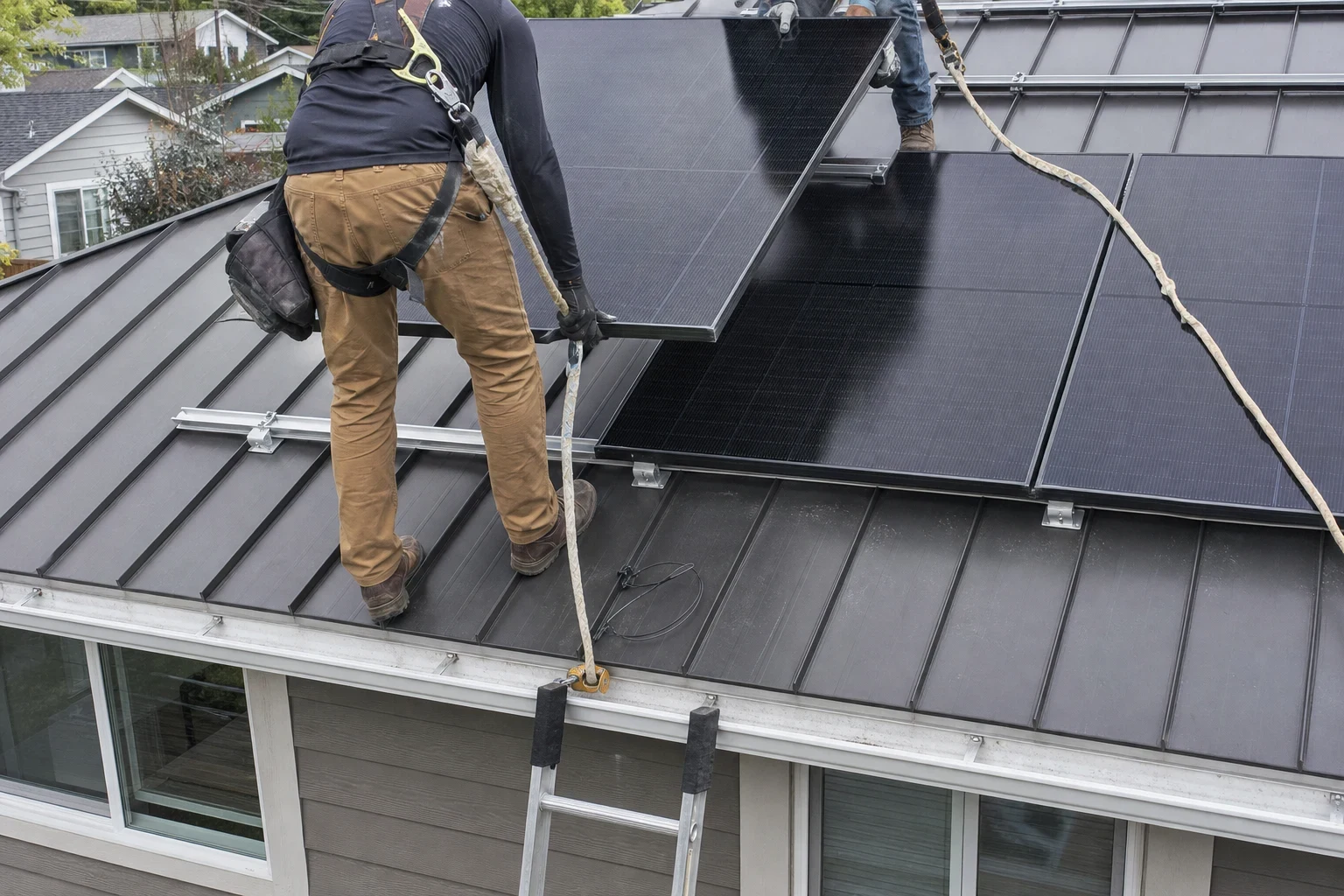
Our installations are rooftop arrays on shingle and standing-seam metal roofs. Panels sit low and parallel to the roof on aluminum rails, fastened through flashed attachments that keep water out. We plan the layout around vents, chimneys and roof edges, and we check how sun reaches each roof plane across the seasons so production stays steady year-round.
What your installation includes
Usage and site review
We go through twelve months of utility history and inspect the roof. We record shade from trees and nearby structures, the roof's age and condition, and the path from the array to your electrical panel.
System design
You receive a layout showing the panel count, which roof planes they sit on and the expected yearly production. We explain why each choice was made in plain language.
Permits and utility approval
We secure the building and electrical permits the city requires. We also prepare the interconnection request for the utility, the approval your system needs before it can connect to the grid.
Attachments, flashing and racking
Each mounting foot is fastened into the roof framing and sealed with flashing suited to shingle or metal roofing. Rails are squared and leveled before any panel goes on, so the array sits straight and the roof stays watertight.
Conduit to the equipment wall
Wiring runs from the array in neat, fastened conduit down to the inverter and disconnect on your equipment wall. Every run is labeled and kept tight to the house.
Startup and walkthrough
Once the inspection passes and the utility gives approval, we power up the system with you there. We then walk you through the monitoring so you can follow what your panels generate day to day.
Signs solar installation is the right call
- Summer bills climb sharply
- If air conditioning doubles your bill from June to September, solar production lines up well with that demand.
- More electric load is coming
- An electric vehicle, a heat pump or a finished basement will raise usage. We size for that now, so you are not adding panels in two years.
- You have a sunny, sound roof
- A south- or west-facing roof plane with little shade and years of life left is an ideal home for panels.
- Your roof is newer or recently replaced
- Installing on a roof with plenty of life left means the panels will not need to come off for a reroof any time soon.
- You plan to stay for years
- Solar rewards ownership over time. The longer you live in your home, the more of its production you keep.
How a solar installation runs
- 1
A first conversation by phone
We talk through your bills and goals, and many homeowners start with a free virtual appointment before anyone visits.
- 2
On-site assessment
We measure the roof, check its condition, look at shade at different times of year and look over your electrical panel. This is where most sizing mistakes are prevented.
- 3
Design and written quote
You get a line-item quote with the system layout and production estimate. Nothing changes without your agreement.
- 4
Installation days
Attachments, racking, panels and wiring usually take a day or two, depending on system size and roof layout. Our crew works in harnesses, protects landscaping below and leaves the site tidy each evening.
- 5
Inspection and switch-on
The city inspector signs off, the utility approves the connection, and we turn the system on with you present.
What moves the price of a solar installation
Neighboring houses often end up with quite different systems, which is why we price from your usage and your roof instead of a fixed package. Every part of the job is listed separately on your written quote, so you can see where the money goes. We also offer $0 up front for homeowners who prefer not to pay at the start.
- System size
- The number of panels follows your yearly usage plus any new load you plan to add. Size moves the price more than anything else.
- Roof type and layout
- Shingle and metal roofs use different attachments. Steep pitches, several roof planes or many vents to work around add labor.
- Equipment selection
- Panel efficiency and the type of inverter shape both the price and how much power a given stretch of roof can produce.
- Electrical panel condition
- An older service panel, or one that is already full, may need an upgrade before it can safely accept solar power. We check it during the site visit, so any upgrade is written into your quote at the outset instead of surfacing midway through the work.
Solar panel installation questions
- What decides the number of panels my home gets?
- Your own records come first: a full year of utility usage, adjusted for changes you expect, such as an electric vehicle. We then weigh that against what your roof can produce once shade and orientation are factored in. The panel count comes out of that comparison, not from a stock system size.
- Will mounting panels cause my roof to leak?
- Not when the attachments are done right. Each mounting point is fastened into the roof framing and sealed with flashing made for your shingle or metal roof. We also check the roof's condition first and tell you if it should be repaired or replaced before panels go on.
- Will snow stop the panels from producing in winter?
- Output falls on short, snowy days, as it does for every system. Snow on smooth panel glass usually slides off within a few sunny days after a storm. Your yearly production estimate already includes the winter months.
- Can a battery be added later on?
- Yes. While we design the system, we can plan the wiring and equipment layout with room for storage, which makes a later addition simple. Our Battery Storage page explains how a battery works alongside your panels.
- Am I responsible for permits or dealing with the utility?
- No. We pull the permits, schedule the inspection and take care of the utility's interconnection paperwork for you. Each time an approval comes through, we call to let you know where the project stands.
Start with an honest look at your numbers
Tell us about your bills and your property, and we will show you what a well-sized system would look like. Ask about Solar System Add-Ons too if you want more from your setup.