ServicesBattery Storage
Battery Storage in South Jordan
A home battery banks the extra power your panels produce around midday and releases it after sunset. It also keeps essentials like the fridge and lights on when the grid goes down. Before we suggest a size or a spot on the wall, we study how your home actually uses electricity.
What a Battery Does for Your Home
Solar panels produce the most power around midday, when many families are out at work or school. Without storage, a good share of that energy is exported to the utility, and the credit you get for it is often smaller than what you pay for grid power after dark. A battery keeps that surplus at home so you can use it at dinner time and overnight.
The second job is backup. When a winter storm or summer wind event knocks out power, a properly wired battery switches over on its own and keeps the circuits you chose running.
The right battery depends on which of those jobs matters more to you, how much you use and when. We look at your utility bills, your existing or planned solar and your electrical panel before we recommend anything. That way the size, the backed-up circuits and the price all trace back to something real.
What Our Battery Storage Work Includes
- 01
Usage and load review
We read twelve months of bills and talk through what you need running in an outage. A medical device, a well pump or a home office changes the plan, and we want to know before we size anything.
- 02
Panel and wiring assessment
We check your main electrical panel for capacity, breaker space and condition. If the panel needs work for a battery to connect safely, you hear that up front, not on installation day.
- 03
Battery and inverter selection
We match battery capacity and output to your loads. Capacity decides how long you run; output decides how many things can run at once.
- 04
Backup circuit planning
Most homes do best backing up a chosen set of circuits on a dedicated subpanel. We walk you through the choices so the battery isn't drained by things you can live without for a day.
- 05
Permits and utility approval
We pull the electrical permit and schedule the inspection. The utility's interconnection paperwork is ours to handle as well, so approvals keep moving without you having to follow up.
- 06
Setup and walkthrough
Before we leave, we set your operating mode in the monitoring app and show you how to read charge level, usage and backup status.
Questions about Battery Storage?
Call(801) 948-2173Signs a Battery Makes Sense for You
You lose power more than you'd like
Even a few outages a year can mean spoiled food, a cold house or lost work. A battery covers those hours quietly.
Your solar credits feel small
If your bill still climbs in the evening while your panels sent power back at noon, storing that midday energy for your own use is often the better trade.
Someone at home depends on electricity
Oxygen concentrators, refrigerated medication and sump pumps need steady power. A battery gives you time instead of a scramble.
You're planning solar now
Adding storage during a new solar panel installation keeps the wiring, permit and inspection in one project.
You work from home
A dropped connection in the middle of the day costs more than an inconvenience. Backing up your router and office circuit is a small, inexpensive load.
How a Battery Project Runs
- 1
A phone call and your bills
You call, we ask a few questions and you share recent utility bills. Many homeowners prefer to do this first step as a free virtual appointment.
- 2
Site visit and diagnosis
We look at the panel, the meter, the wall space and the path for wiring. We confirm what actually drives your goals, such as which loads push up your evening use, so the recommendation rests on facts.
- 3
A written proposal
You get a clear proposal listing the battery, the backed-up circuits and any panel work, with each line explained. No pressure to decide on the spot.
- 4
Installation day
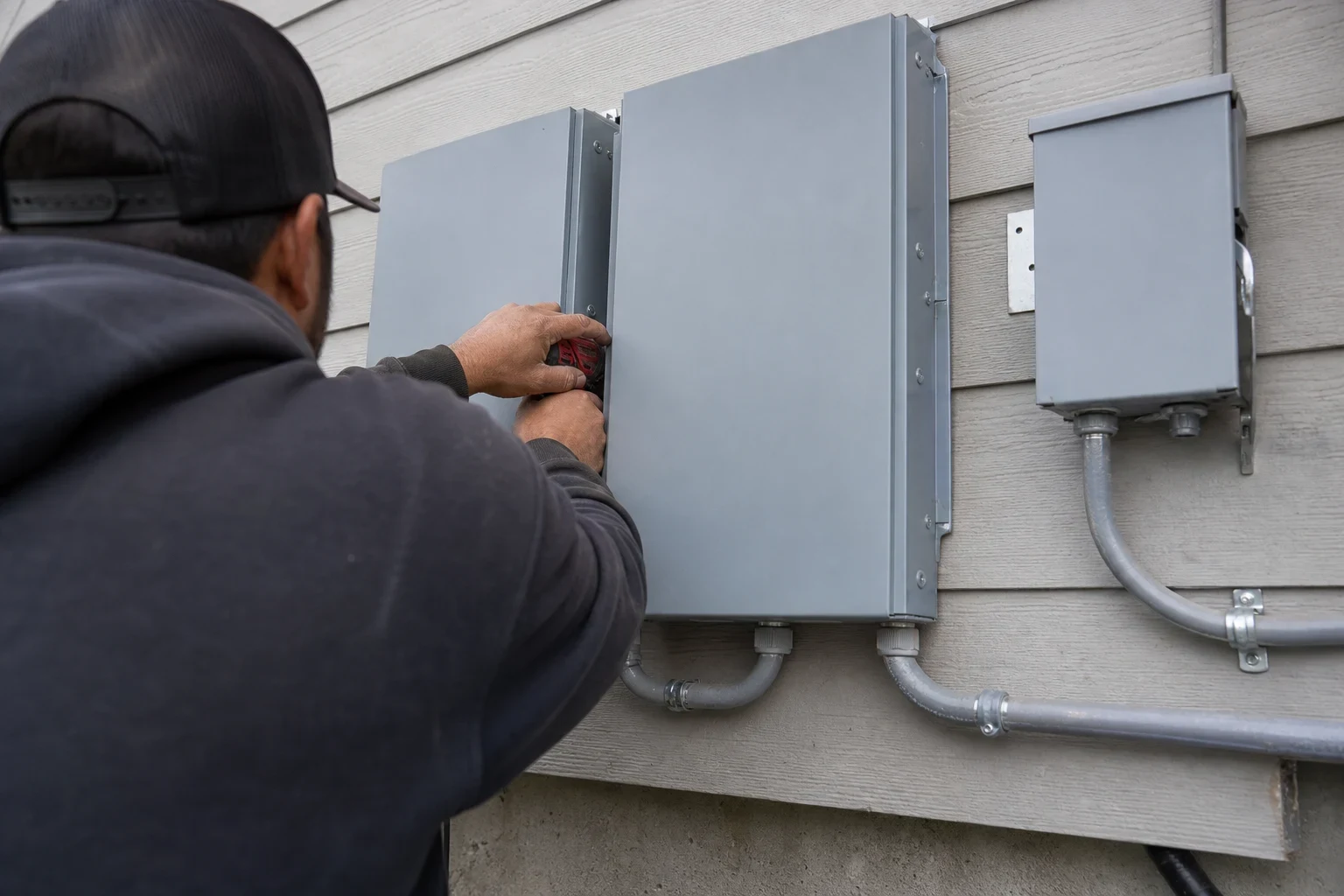
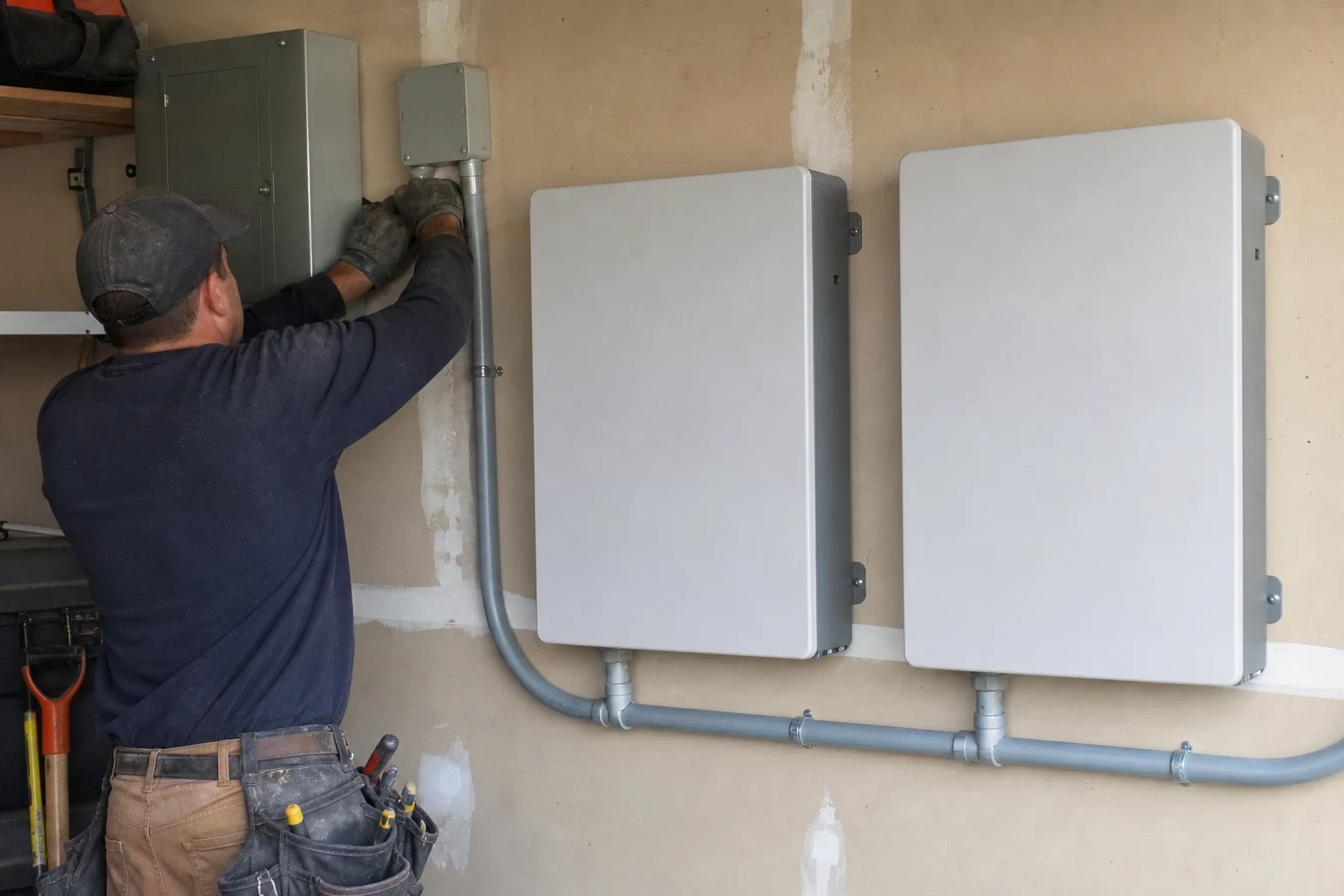
Most battery installs take a day. The battery mounts on an exterior or garage wall near your panel, power is off for a few hours while we connect, and we clean up the work area when we finish.
- 5
Inspection and switch-on
After the inspection passes and the utility clears the connection, we turn the system on. You watch while we test a backup transfer, and we set the operating mode you chose.
What Moves the Cost of Battery Storage
There is no single price for a home battery, because two houses on the same street can need very different systems. The cost follows a handful of decisions we make together during the visit. Financing with $0 up front is available, and we'll explain how it works on the call.
- Storage capacity
- More stored energy means longer backup and more evening use. We size to your actual loads so you aren't paying for capacity you'll never draw on.
- Whole-home or partial backup
- Backing up central air or an electric range needs more output than lights, a fridge and outlets. Choosing circuits carefully is often the biggest lever on price.
- Electrical panel condition
- An older or full panel may need a subpanel, new breakers or an upgrade before a battery can connect safely.
- Existing solar or a new system
- Pairing with panels you already have may call for a different inverter setup than a battery added during a new installation.
- Mounting location and wire run
- A short, clear path from battery to panel keeps labor down. Long runs or tight spaces add time and material.
Battery Storage Questions
How long will a battery keep my home running in an outage?
That comes down to the battery's capacity and how much you leave switched on. Essentials like the fridge, lights, internet and a furnace fan can often carry through the night, and longer once the sun comes up and your panels start refilling the battery. The runtime we quote is worked out from your own loads, so it reflects your home rather than a best-case figure.
Will a battery work with the solar system on my home now?
In most cases it will. The first thing we check is your existing inverter and wiring, because some systems accept a battery directly while others need extra equipment to connect. We tell you which situation you're in before you make any decision.
Do I need solar to get a battery?
A battery can charge from the grid and serve as backup alone, but it works best paired with solar, which refills it every sunny day. If you're considering both, we can plan them as one project.
Is a battery noisy, and where does it go?
Home batteries run nearly silent, with a light hum at most under heavy load. They usually mount on a garage or exterior wall close to your electrical panel, and we choose a spot that meets code clearances and keeps the finish tidy.
What happens when the power goes out?
The system senses the outage and moves your backed-up circuits onto battery power by itself, usually quickly enough that clocks don't reset. Once grid power returns, it hands the load back and resumes normal charging.
Find Out What Size Battery Your Home Needs
Every member of our team who earns a referral bonus knows the rule: you can earn $1,000 for every referral that goes solar. Before any of that, we look at your usage and backup needs and tell you plainly what makes sense, including when a battery doesn't.